Summer I Spy Counting Activities for Kindergarten Digital and Printable
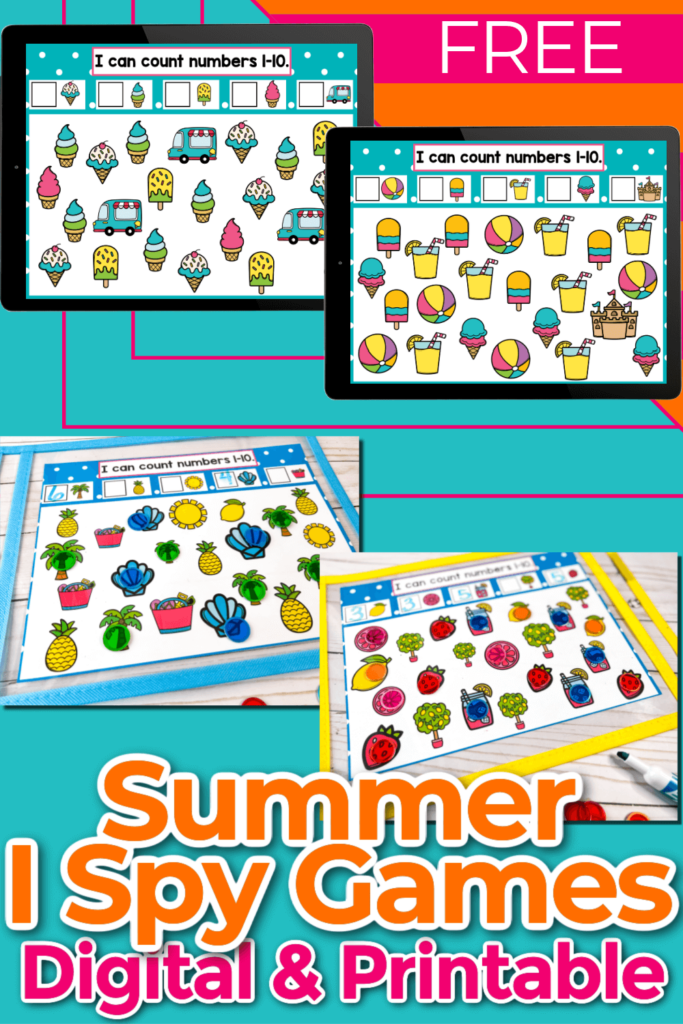
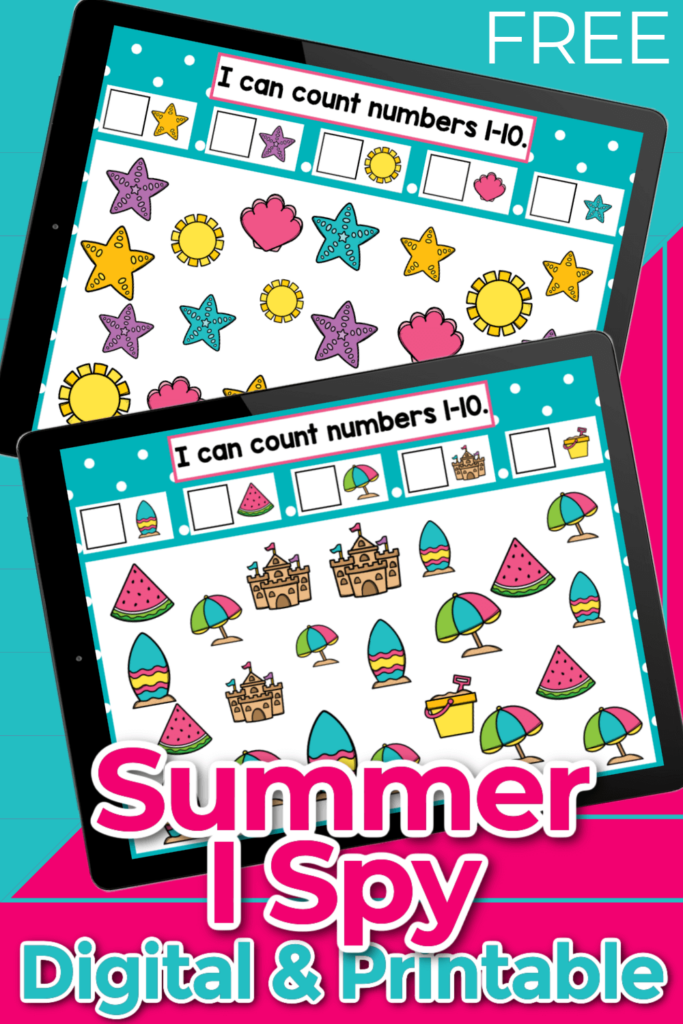
I don’t know about you, but summer is my favorite. I can’t ever get enough of the warm sunny days! This kindergarten counting activity combines the fun of summer with the importance of practicing numbers and counting. Whether you are a teacher who needs a summer-themed math center for the end of the year or a parent looking for fun learning activities during summer vacation, this number activity is for you!
Recommended Grade Level:


Learning about Numbers in Kindergarten:
Kindergarten numbers
KINDERGARTENERS LEARN NUMBER AND MATH SKILLS THAT THEY WILL USE AND BUILD ON FOR THE REST OF THEIR LIVES.
Kindergarteners learn so many important math skills! Kindergarten students learn to…
- Count to 100 by both ones and tens.
- Count forward from a given number without needing to start at 1.
- Understand the direct relationship between numbers and quantity.
- Write numbers 0-20.
- Compare numbers 0-10.
- Add and subtract within 10.
- Decompose numbers into different parts.
- And so much more!
As you can see, kindergarteners’ math muscles stretch and grow a lot throughout the year! Because they are learning so many important things, kindergarteners need opportunities to practice their counting and number skills in various contexts and situations. In addition, kindergarten math lessons should be fun, engaging, and hands-on. Teaching numbers and counting definitely doesn’t need to be boring!
Teaching Counting in Kindergarten:
Kindergarten number sense
KINDERGARTENERS NEED TO HAVE LOTS OF OPPORTUNITIES TO PRACTICE NUMBER RECOGNITION AND COUNTING.
It’s wild to think about how often we count in our everyday lives. We count money, people, food, toys, books, animals, and everything in between- often without really thinking about it. Because counting is so integral to everyday tasks, it is crucial for kids to have repeated and varied practice counting.
Many times, counting practice is natural and fits into normal conversation. As teachers and/or parents, we can look for ways to incorporate numbers and counting in our everyday routines. We can say things like:
- How many crackers do you have on your plate for lunch?
- Pick out two toys to bring in the car.
- Choose three books to read before bed.
- How many students are in our class?
- How many days are left until _______?
- Let’s count how long it takes us to get to the carpet.
- By the time I count to 20, you need to be siting in your seat.
However, explicit instruction and structured practice opportunities are also important for young learners. Number games, hands-on activities, worksheets, and digital activities are all great tools for learners to strengthen their counting muscles.
Why Is It Important For Kids To Practice Counting?
Not only is counting an essential skill for everyday life, it is also foundational to more complex math concepts. Frequent counting practice prepares students to be successful in the future.
Develops Fluency
Frequent practice improves a child’s speed and accuracy when counting. In addition, repeated practice counting by ones prepares children for more complex counting, like skip counting and counting backwards.
Improves Problem-Solving
Counting is part of most math tasks, including adding, subtracting, comparing numbers, and solving word problems. Consistent counting practice prepares children for future computation and problem-solving.
Builds Number Sense
Regular counting practice builds children’s understanding of numbers and quantity. Strong number sense will help children with skills like subitizing and number bonds.
How To Use This Summer Counting Activity:
Counting numbers 1-10
CELEBRATE SUMMER AND PRACTICE COUNTING WITH THIS FUN DIGITAL/PRINTABLE ACTIVITY!
This activity is super versatile. The download has an option for Seesaw, Google Slides, or print. No matter which option you choose, your students will love this activity!
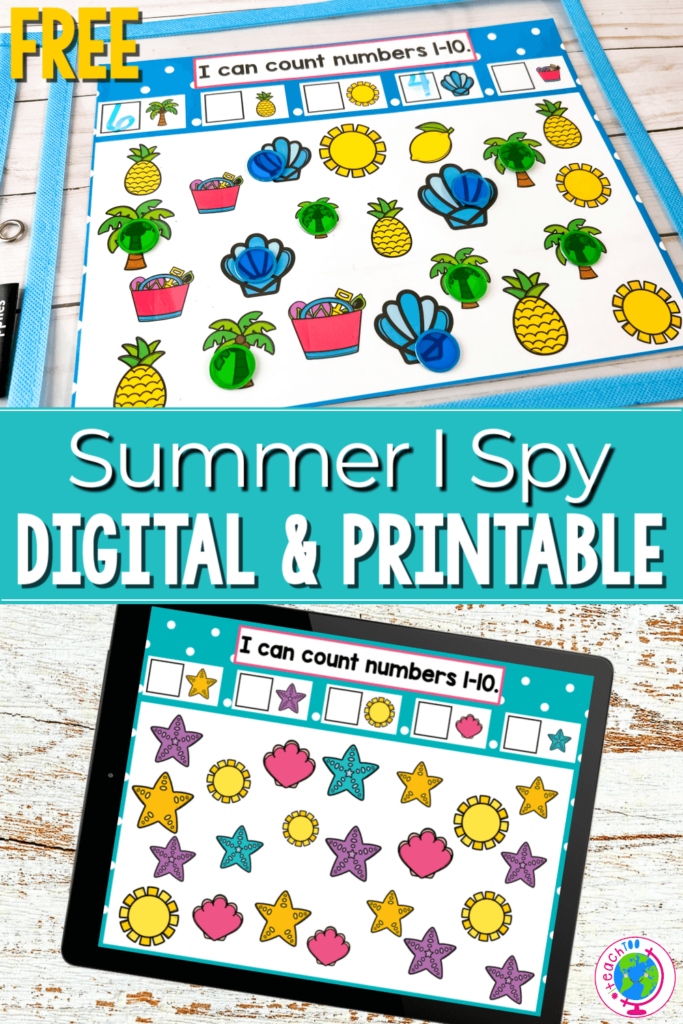
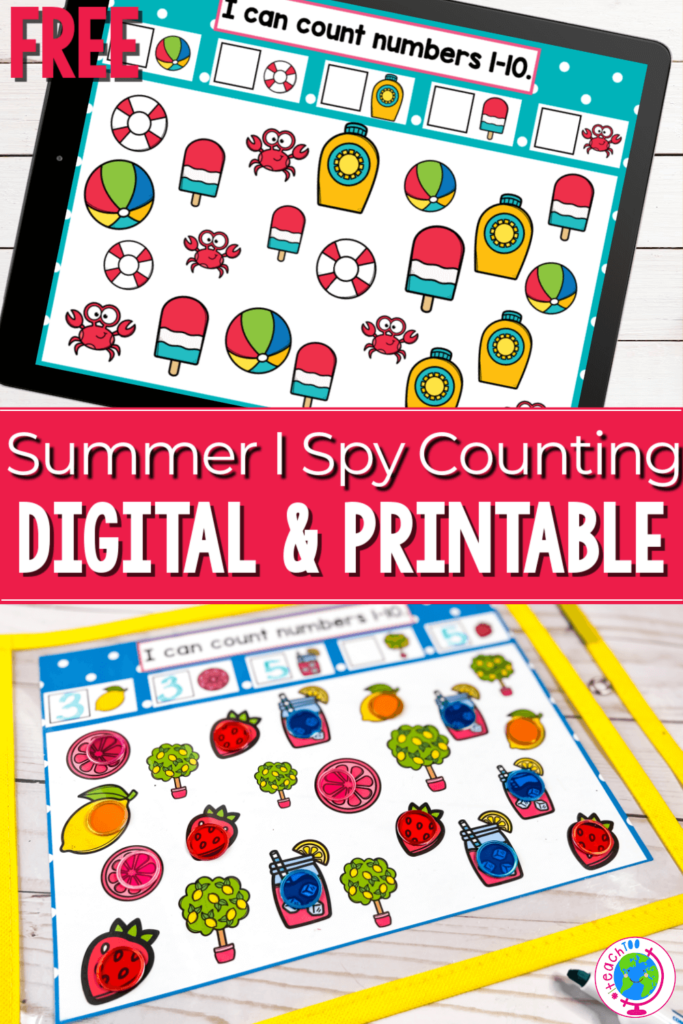
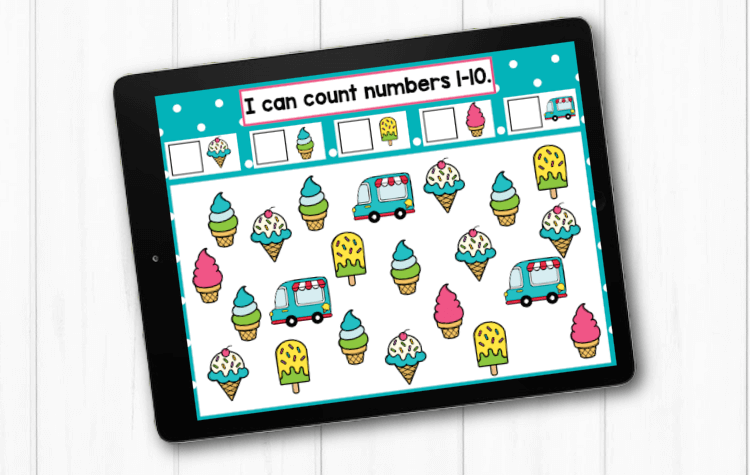
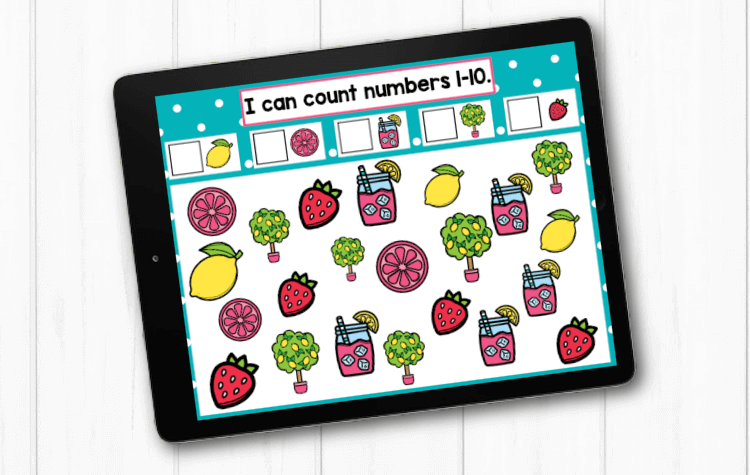
The activity includes 10 different “I Spy” pages with adorable summer-themed objects. On each page, students count each kind of object and record how many of each they found. It’s that simple!
How to Get the Activity
- Enter your email below and then check your inbox to get the activity.
- When you open the file you can click on the format that you prefer to use: Google Slides®, Seesaw® or upgrade to self-checking Boom Cards®.
- If you are downloading the Google Slides version you will be prompted to “Make a copy”. This is an important step you need to complete to make sure you get an editable version to share with your students!
- In Slides, make sure you are in “Edit” mode, as opposed to “Present” mode. You will see the “Present” button in the upper right-hand corner.
- In Slides, just click on the symbol box to highlight it in blue and drag it when the cursor resembles a plus sign with an arrow on each end.
- If you choose the Seesaw version, click the Seesaw image to instantly add it to your Seesaw library.
- Use the Text tool (click on the large T) to be able to highlight each symbol to move it.
- To upgrade to self-checking Boom Cards®, click on the image in the download PDF to purchase the deck to use with your students.
- Or check out the Apple Counting Self-Checking Boom Cards® here!
- Finally, if you choose self-correcting Boom Cards, remember you must be connected to the Internet in order for the cards to work.
Easy Ways to Extend the Activity
Counters/Manipulatives
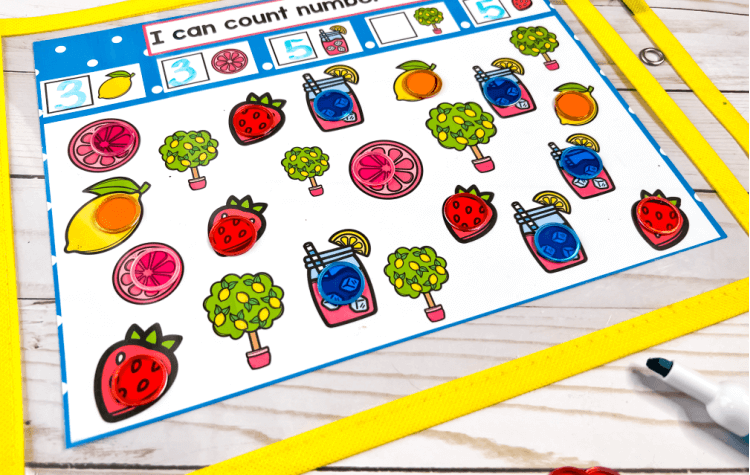
If you use the printable version of the activity, have students place counters/manipulatives on the objects as they’re counting. This reinforces the 1:1 relationship between numbers and quantity.
Partner Activity
Students can complete the activity together! Each child will have either a set of the printed I-Spy sheets or an iPad/tablet/computer loaded with the activity. Students will complete an I-Spy page individually and then compare answers with their partner.
Whole-Class Practice or Assessment
Try completing the activity as a whole class. Display the I-Spy pages on a whiteboard so that everyone can see ( using a projector, document camera, SmartBoard, etc.). Count the objects as a class and let students take turns writing the numbers on the board. The activity could easily function as an informal assessment as well.
Our Favorite Counting Books:
We can’t live without these!
Once your child’s creativity is sparked with this fun activity, take it a step further with these engaging resources:
As an Amazon Associate I earn from qualifying purchases.
Ten Black DotsOne Fish Two Fish Red Fish Blue Fish
Chicka Chicka 1, 2, 3
10 Little Hot Dogs
Counting Crocodiles
How Many Snails?: A Counting Book (Counting Books (Greenwillow Books))
1, 2, 3 to the Zoo: A Counting Book
Butterfly Counting (Jerry Pallotta’s Counting Books)
Five Little Monkeys Jump in the Bath (A Five Little Monkeys Story)
Curious George Learns to Count from 1 to 100

Join the I Teach Too Newsletter and Get Your Activity